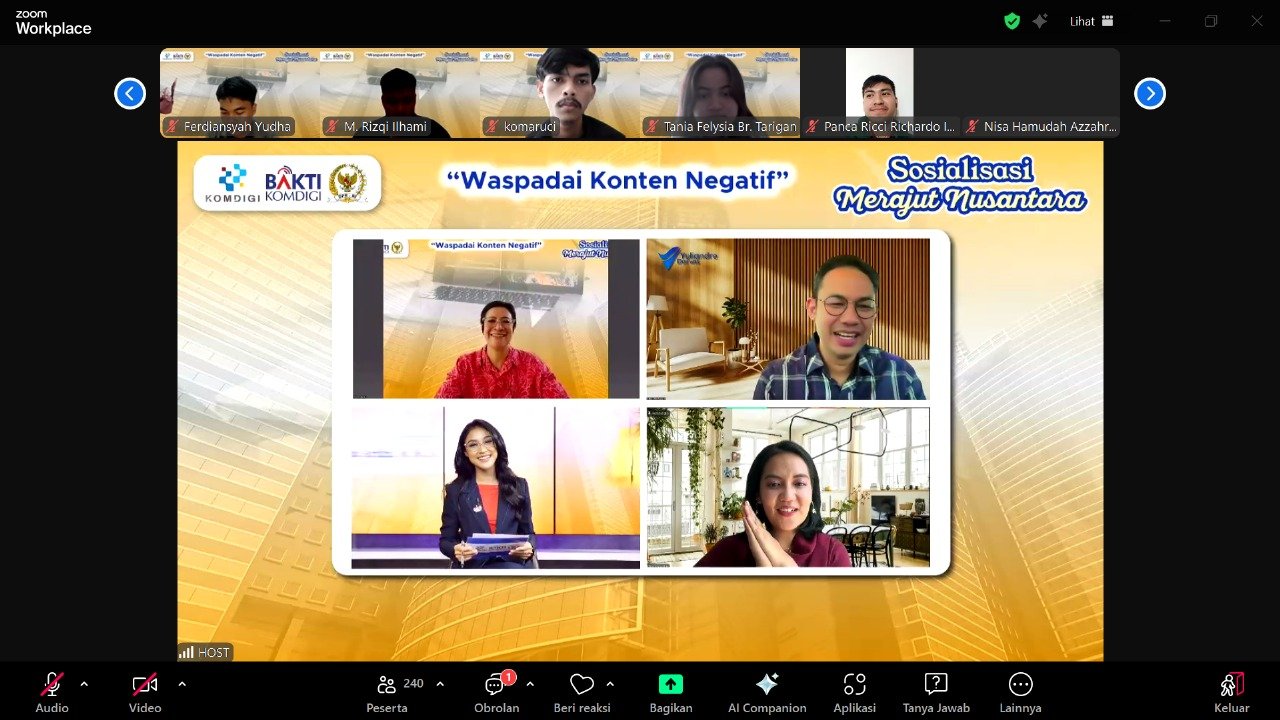
Jakarta, 17/6 – The widespread circulation of negative content in the digital space is a serious challenge for society, especially for young people. From hoaxes, hate speech, pornography and violence to destructive trends on social media, it has had a worrying effect on users’ behaviour and psychology. In response, BAKTI Komdigi and Commission I of the House of Representatives held a webinar titled “Beware of Negative Content: Building Communication Resilience in the Digital Era” on Wednesday (18/6).
The webinar featured Nurul Arifin, a member of Commission I; Yuliandre Darwis, Chair of the Expert Council of ISKI; and media activist Dara Nasution, who stressed the importance of building a critical, ethical and responsible communication culture in the face of an unstoppable onslaught of digital information. “Our digital space is now like a highway without road signs. Negative content appears every second, and without resilience in our thinking, anyone can slip. This is not only about technology; it is about healthy communication,” said Nurul Arifin.
According to her, many people, especially young people, still tend to react to content, do not verify it and are easily carried away by emotion. In the long term, this can deepen polarisation, worsen mental health and damage the quality of public dialogue.
Dara Nasution highlighted the role of social media algorithms, which often reinforce echo chambers and information bubbles. “What we see is not reality but what the system thinks we like. If we only consume negative content, that is what keeps being pushed onto our screens,” she said.
As a communication expert, Yuliandre Darwis urged the participants, who came from communities in West Java, to make a habit of four steps of digitally conscious communication: verifying information, reflecting on the impact before sharing content, choosing credible sources of information, and building empathy when interacting online.